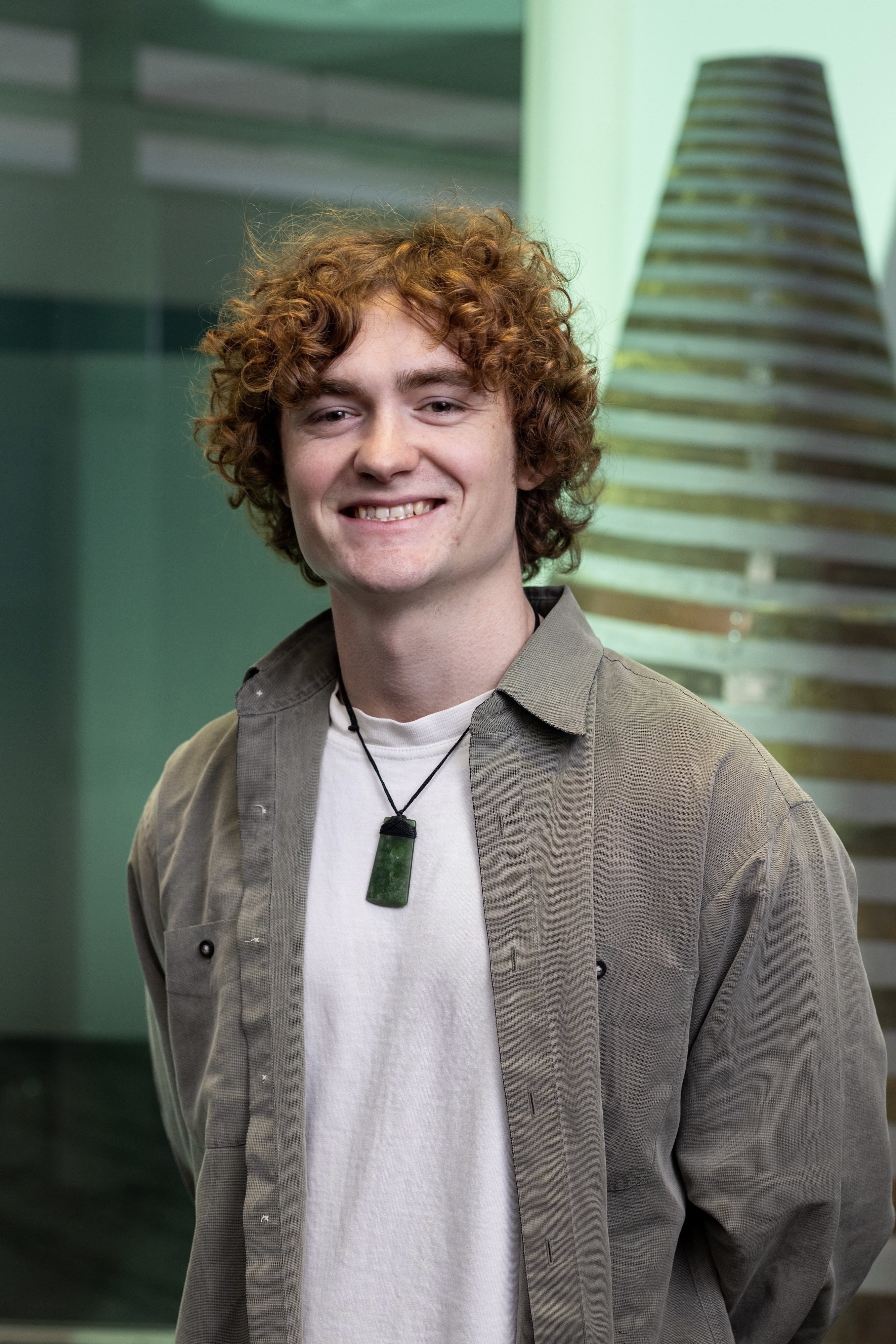
01 About
I study fast-evolving transients, and investigate how we can use them to probe the structure of the Universe. My doctoral research focuses on using Fast Radio Bursts as tools for cosmological analysis, but I'm also interested and actively work in discovering all kinds of optical transients with high cadence instruments.
I'm a third year PhD student in Astrophysics at Curtin University working with AProf. Clancy James, and also co-lead the TESSELLATE Collaboration alongside Dr. Ryan Ridden-Harper. I previously completed a BSc (Hons) degree in Physics and Astronomy at the University of Canterbury in Christchurch, NZ.
02 Projects
Here are some of the projects I'm actively working on right now. Click to read more!
This is the current focus of my doctoral research, which aims to identify gaps in the inference methods we currently use to probe large scale structure with FRBs. I made a pipeline called SimSight (on github soon!) which efficiently simulates line-of-sight observables (e.g. DM/RM) and records data at high resolution such that integrated contributions can be partitioned into the IGM vs. CGM, allowing for more finely understood ground truth comparison. This pipeline is designed to be compatible with any simulation suite; below shows an ensemble of 100,000 sightlines traversing SIMBA's 100Mpc box.
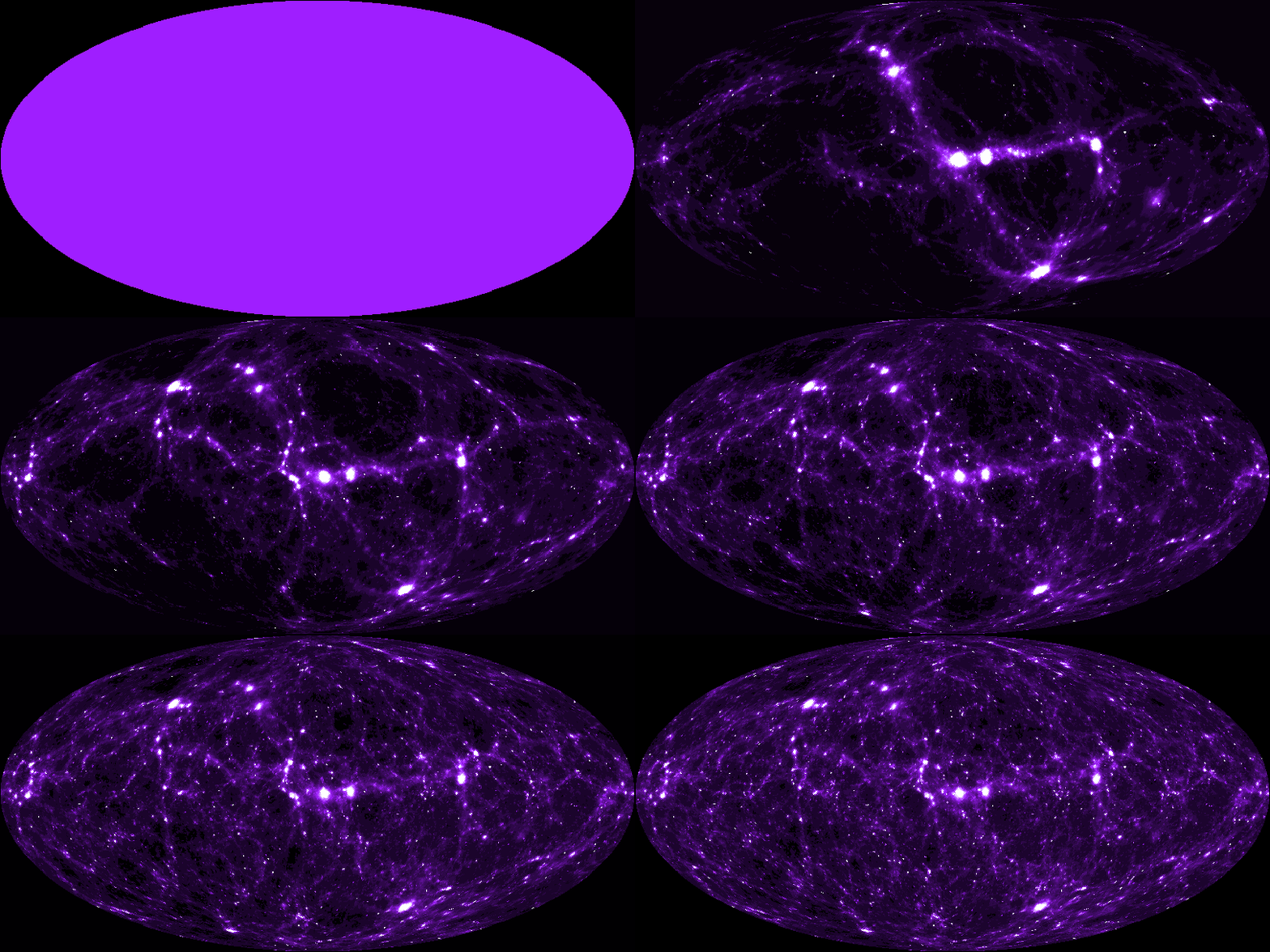
Through this pipeline, we can test our inference methods --- e.g. cosmological analysis through the Macquart relation, or baryonic halo structure determination as done in FLIMFLAM (Khrykin+2024) --- with maximum realism. This enables us to identify shortcomings or potential avenues to improve the constraining power of FRBs.
My primary focus right now is on determining the impact of the parametrisation of assumed halo structure models, which are unlikely to match "reality". By conducting such analyses in several very different simulation suites (currently SIMBA & TNG300), we can confidently identify systematics in our modelling, necessitating the generation of the SimSight pipeline.
SimSight works on any line-of-sight observable! If you have a cosmological parameter you're interested in probing, contact me!
The Transiting Exoplanet Survey Satellite is one of very few telescopes capable of documenting optical variability on minute time scales for long periods of time. However, due to its massive data volume and poor spatial resolution, it has only been used as a follow-up tool for transient characterisation thus far.
I am the co-lead of the TESSELLATE Collaboration, which aims to change this. We built the first end-to-end pipeline, called TESSELLATE, that processes TESS images to generate differenced data cubes which are then combed for variability of all kinds.
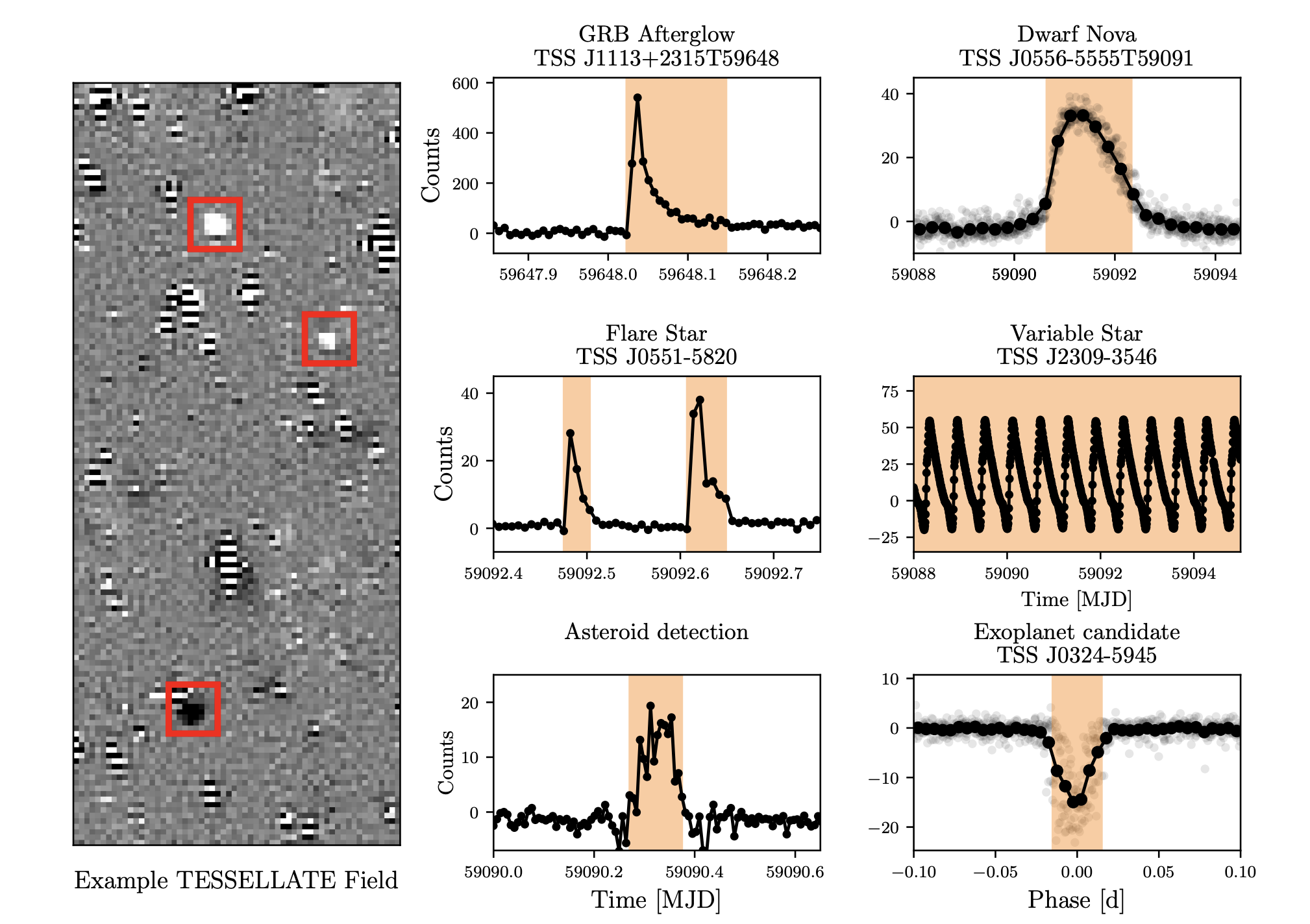
We are currently conducting the pilot runs of the TESSELLATE Sky Survey, which primarily aims to discover new rapid extragalactic transients, document fast variable and flare stars, and characterise thousands of asteroids at unprecented time resolution. While this pilot survey is running on archival data spanning two years between 2020 and 2022, future runs will process as realtime as possible.
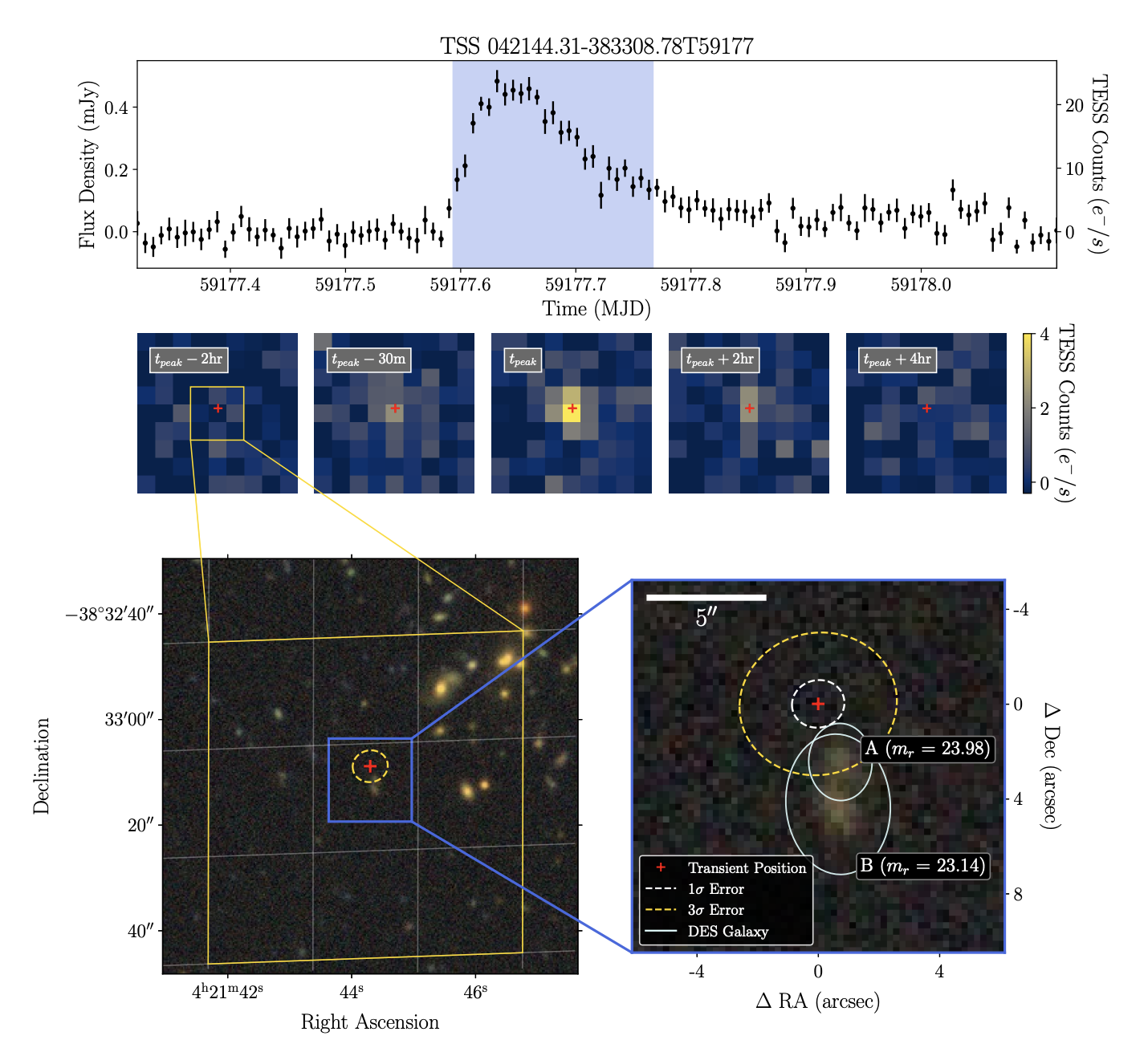
In one of these pilot runs, we recently discovered a new hour-scale optical transient with an extragalactic origin (see below). Through modelling, we classify AT2020afjz as either an off-axis or dirty fireball GRB afterglow, making it one of only a very small handful of optically identified GRB afterglows, and the first with a fully time-resolved rise and decay. This marks a turning point in TESS's ability to discover interesting transients, rather than simply provide supplementary data. Much more to come!
My first introduction to radio astronomy involved observing the host galaxies of FRBs in HI, atomic hydrogen. The distribution of HI in a galaxy can reveal a lot about its dynamical evolution and star formation behaviour, which in turn can be used to infer information about the progenitors of FRBs.
Through observations with the GMRT, MeerKAT, and FAST radio telescopes, I led work to quadruple the sample of FRB host galaxies observed in HI, finding that all but one exhibit rich HI disks (e.g. below). This falls in line with the known connection between FRBs and star formation. We found wide variation in the HI derived properties of the hosts, but potentially identified a possible (low-number) trend pushing repeating FRB hosts to lower HI masses. We also largely refuted previous indications of consistent galaxy-scale disturbance in the population of FRB host galaxies, documenting several stable host galaxies.
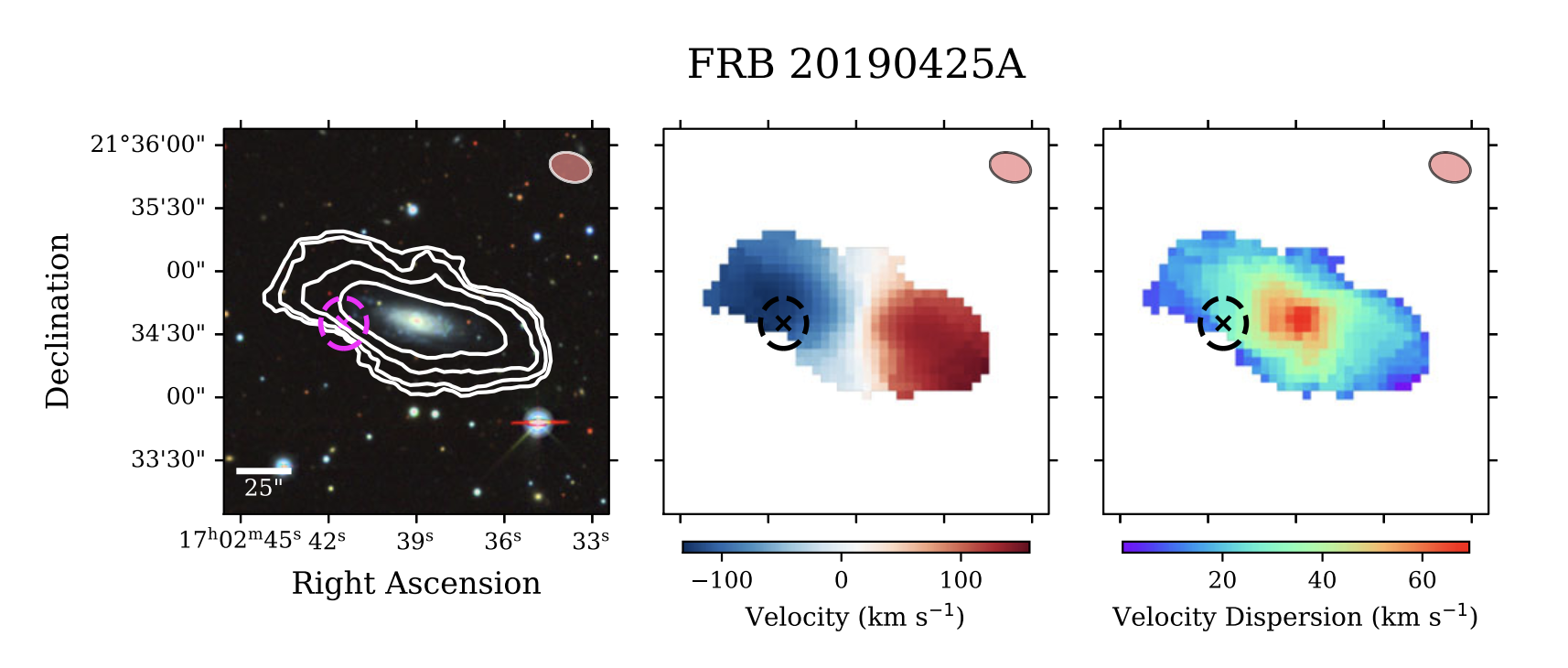
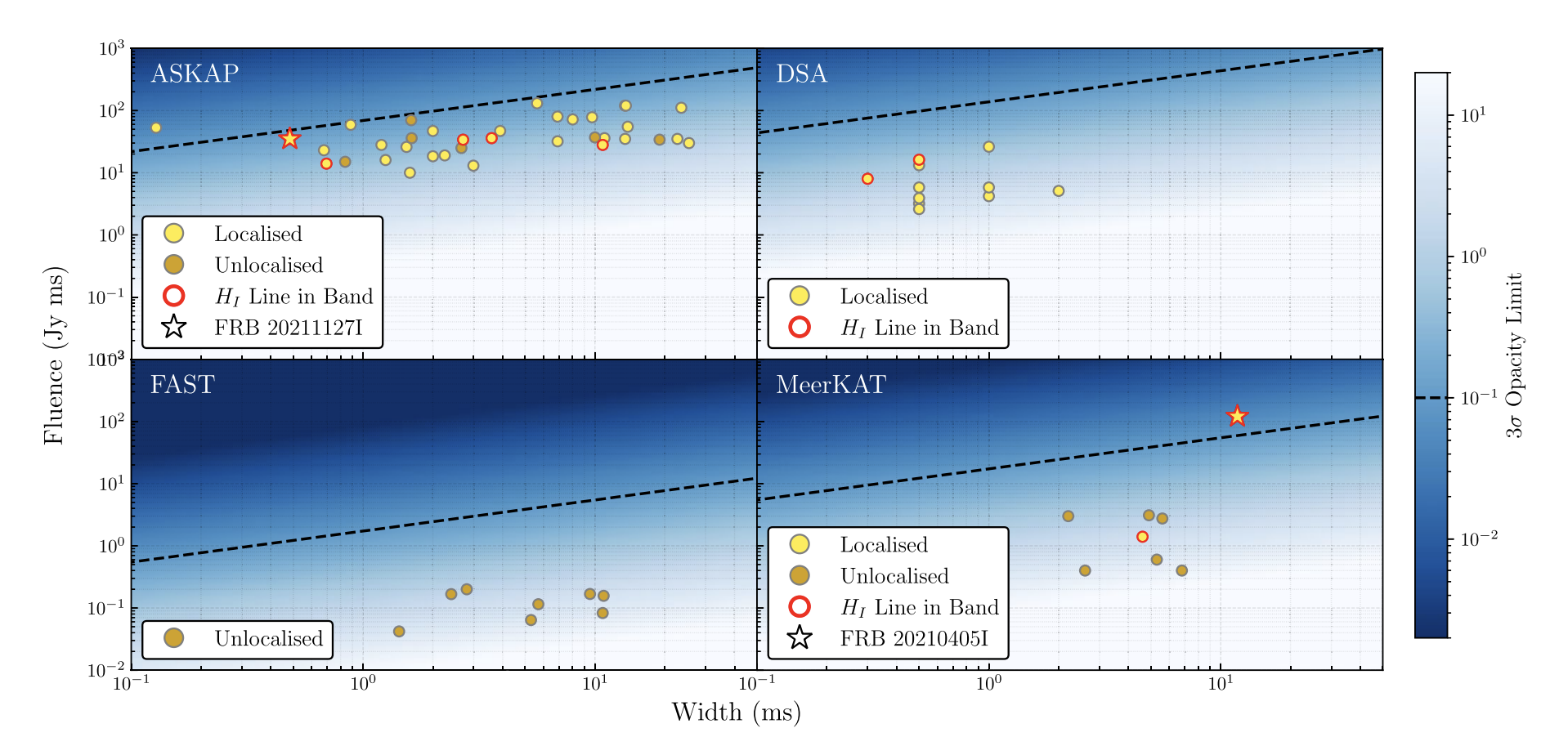
I also explored the modern likelihood of detecting HI absorption in the spectra of FRBs detected with current generation radio facitilies. The presence of such a feature would offer insight into the dynamics of the material surrounding the progenitor and/or the conditions of the ISM within the host galaxy. We found that, in extreme FRBs, it is certainly possible to detect an absorption feature, and in particular, there are several repeating FRBs targetable with FAST suitable for stacking studies to push the absorption sensitivity extremely high.
03 First Author Publications
I am first or co-first author on five papers, and am a co-author on two more.
- [1]
- [2]
- [3]
- [4]
- [5]
04 Contact
Find me here.